Tuesday, 14 May 2013
Coming Soon…
So first of all, I’m afraid I’ve got a bit of an update on the immediate future of this blog to get out of the way.
Nothing catastrophic I hope, but, without wishing to burden you with the details, let’s just say that my life is very busy at the moment with pursuits that do not afford me much time to geek out over strange movies and old books in the manner to which I have hitherto been accustomed.
Therefore, I offer no guarantees that I will be able to maintain even my usual erratic posting schedule in the near future, and the content I do rustle together may end up being somewhat eccentric, but… I enjoy doing this blog a great deal, and I’m always very gratified that people read it, so I’ll do what I can to keep things rolling along. Thanks in advance for sticking around.
Secondly though, and as the banner above has probably already informed you, I'm happy to note that the last week of this month marks the centenary of the birth of a man whose work I hope requires no introduction to readers of the blog, your friend and mine, Mr Peter Cushing.
A good old fashioned blogathon is being co-ordinated by the Frankensteinia weblog, and somewhere, somehow, I intend to take part. Expect pointless list-making, warm, cozy, Hammer-y feelings and, well, we’ll see how things go, writing-wise. Take care everybody, and I’ll be back in a jiffy.
Labels:
blog talk,
Hammer,
lameness excuses,
Peter Cushing
Thursday, 2 May 2013
Weird Tales:
Frank Belknap Long
Frank Belknap Long
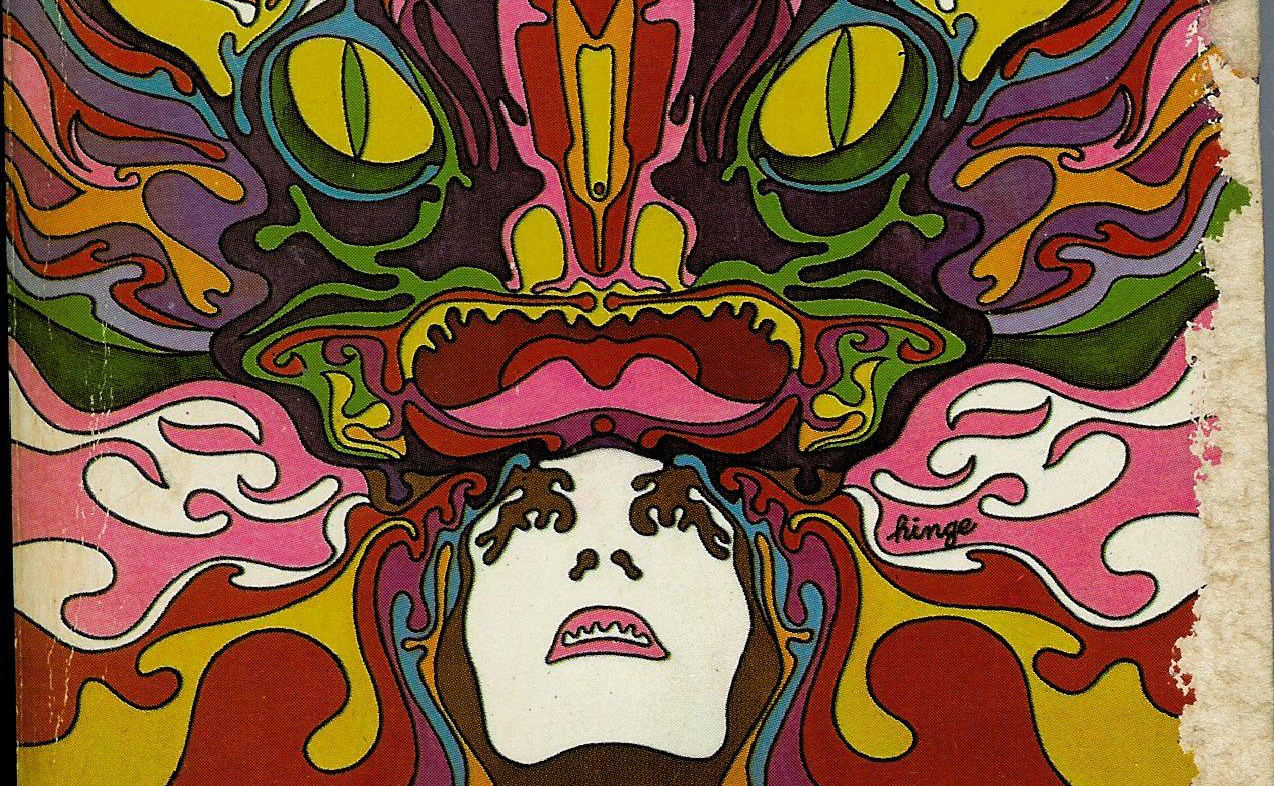
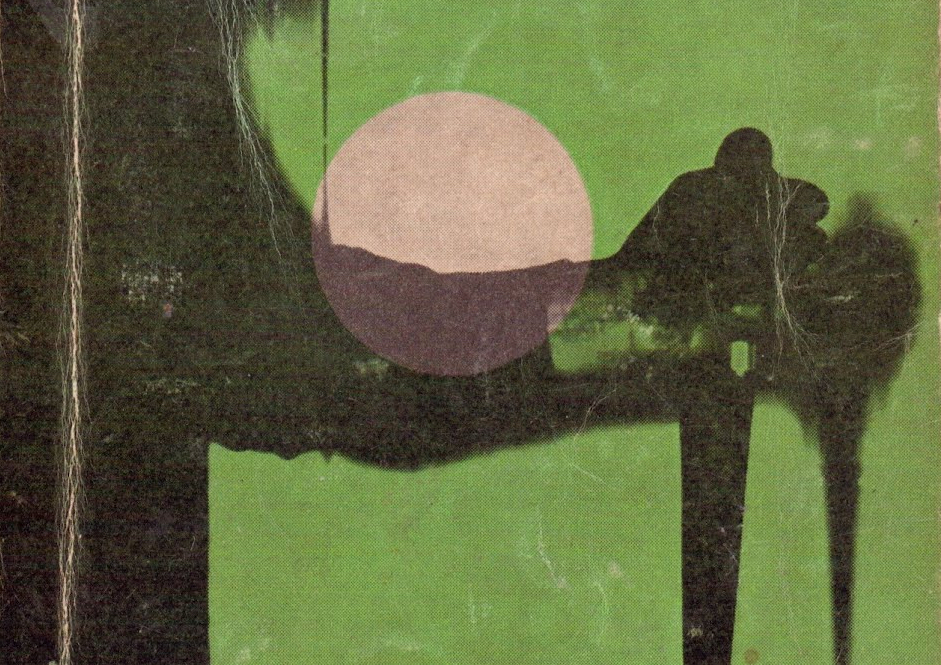
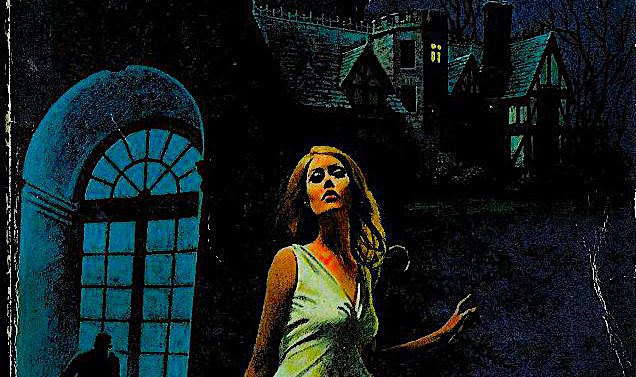
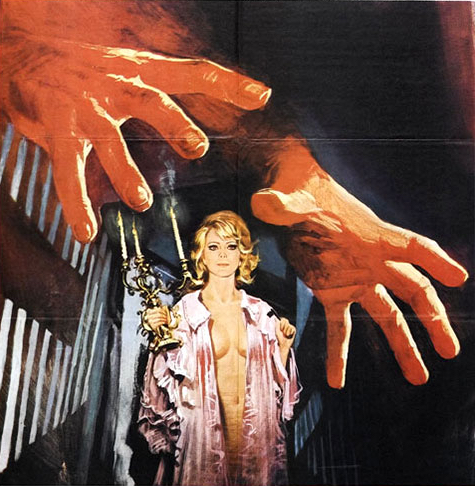
Frank Belknap Long (1901-1994) was high on the list, and the enticing 1975 Panther anthology you see above was soon in our hands. THE BLACK DRUID. Yeah, that’s the stuff. And what a cover!
A few pages into the title story however, and Frank Belknap Long was very much off the list. You’d have thought that exposure to HPL’s more fragrant meanderings might have already prepared us for what was in store, but all the same, Long’s particular brand of bizarre, artless prose and rambling, hackneyed storytelling provoked such a strong negative reaction that until recently I’d pretty much written the guy off completely, consigning this book to the shelf, leaving most of the other stories unread.
The opening paragraphs were questionable enough:
“Mr Stephen Benefield entered the library and hung his black Chesterfield overcoat on the rack which the trustees had grudgingly provided for the accommodation of inclement and cold weather accessories. There were seven other overcoats on the rack. Mr Benefield paused to count them – he was a methodical and observing man – and passed to the reference desk. When the librarian approached him he nodded amiably.
‘I wish to peruse, please, Lucian Brown’s The Cromlech Jeelos. It is No. 3268 A. I looked it up yesterday in the catalogue.’
[…]
Closing the book Mr Benefield smiled and passed it back over the desk. ‘That is the passage I was looking for,’ he explained. ‘I do not believe I shall need a copy of it. I thought it might be a very long passage, but it is so brief that I can remember enough to paraphrase it without the aid of a written copy. Thank you very much. I am Stephen Benefield, an archaeologist. I use such passages in my books.’”
But I recall that it was the author’s subsequent description of his protagonist that particularly aroused our derision:
“It is true that Mr Benefield was, in some respects, an odd looking man. His hair was absurdly long and it descended upon his forehead in a circular, antiquated bang; his hat was two sizes too small for his immoderately large head – a brachycephalic head, although he boasted twenty generations of Saxon forebears – and his socks, which his wife had purchased for him, were of heavy wool, and unsupported by garters they bulged above his shoes like the elephantine folds on the torso of an Abyssinian eunuch.”
Needless to say, reading these passages again as an adult, I can’t help but feel that we were missing the point somewhat. Although Long’s prose is certainly somewhat peculiar, I think I’m now more able to appreciate the quasi-tongue in cheek, knowingly antiquated pulp style that he was going for. Rather than laughing AT him, perhaps we should have been laughing WITH him, so to speak. Lacking the more ‘refined’ literary affectations of his fellow Weird Tales writers, Long instead writes with a kind of woolly, bellowing gusto - somewhat like the prose equivalent of Brian Blessed’s speaking voice - and most of his stories give the impression of having been hammered out at break-neck speed to reach the next issue’s deadline… which was more than likely the case I suppose, given his position as an aspirant full-time writer struggling to support a family through the worst years of the great depression.
Perhaps as a result of these pressures, the bulk of the innumerable weird tales Long cranked out through the ‘20s and 30s are indeed somewhat less than inspired. But when he did hit on something good, he hit it HARD, as is demonstrated by the handful of his more celebrated efforts compiled in the Arkham House anthology ‘Tales of the Cthulhu Mythos’, which I finally got around to reading last month.
Read it as I did, bleary-eyed after a few drinks in the final half hour before sleep, and it’s pretty wild stuff, whether in 1929, 2013, or in the dark, curved spaces before the dawn of recorded time:
“Chalmers lay stretched out upon his back in the centre of the room. He was starkly nude, and his chest and arms were covered with a peculiar bluish pus or ichor. His head lay grotesquely upon his chest. It had been completely severed from his body, and the features were twisted and torn and horribly mangled. Nowhere was there a trace of blood.
The room presented a most astonishing appearance. The intersections of the walls, ceiling and floor had been thickly smeared with plaster of paris, but at intervals fragments had cracked and fallen off, and someone had grouped these upon the floor around the murdered man so as to form a perfect triangle.
Beside the body were several sheets of charred yellow paper. These bore fantastic geometric designs and symbols and several hastily scrawled sentences. The sentences were almost illegible and so absurd in content that they furnished no possible clue to the perpetrator of the crime. ‘I am waiting and watching,’ Chalmers wrote. ‘I sit by the window and watch the walls and ceiling. I do not believe they can reach me, but I must be aware of the Doels. Perhaps they can help them break through. The satyrs will help, and they can advance through the scarlet circles. The Greeks knew a way of preventing that. It is a great pity that we have forgotten so much.’
On another sheet of paper, the badly charred remains of seven or eight fragments found by Detective-Sergeant Douglas (of the Partridgeville Reserve), was scrawled the following: ‘Good god, the plaster is falling! A terrific shock has loosened the plaster and it is falling. An earthquake perhaps! I could never have anticipated this. It is glowing dark in the room. I must phone Frank. But can he get here in time? I will try. I will recite the Einstein formula. I will - God, they are breaking through! They are breaking through! Smoke is pouring from the corners of the wall. Their tongues – aghhh –’”
Perhaps not quite as far-out, but equally entertaining, ‘The Space Eaters’ (1928) not only opens with one of the greatest non-sequitur, one sentence paragraphs of all-time (I defy you to beat “The horror came to Partridgeville in a blind fog.”), but also adopts an in-joke filled, fourth wall-breaking format that lends it a particular resonance for fans of H.P. Lovecraft and the world he inhabited.
More than just another correspondent or contemporary, Frank Belknap Long was one of the few people who could actually claim to have been a close personal friend of Lovecraft, getting to know him not merely through the voluminous exchanges of correspondence with which Lovecraft managed most of his personal relationships, but in person too. Lovecraft regularly stayed with Long’s family in Brooklyn whilst visiting New York, and the pair spent a great deal of time together during HPL’s ill-fated sojourn in the city in the mid-‘20s.
Howard & Frank, Flatbush, Brooklyn, 1931
With this in mind, little is left to the imagination when ‘The Space Eaters’ introduces us to ‘Frank’, a practical, rambunctious sort of fellow who is currently ensconced in a remote farmhouse with his good friend ‘Howard’, an intense, haunted author of sanity-shaking macabre tales;
“My friend wrote short stories. He wrote to please himself, in defiance of contemporary taste, and his tales were unusual. They would have delighted Poe; they would have delighted Hawthorne, or Ambrose Bierce, or Villiers de l’Isle-Adam. They were studies of abnormal men, abnormal beasts, abnormal plants. He wrote of remote relams of imagination and horror, and the colors, sounds and odors which he dared to evoke were never seen, heard or smelt on the familiar side of the moon. He projected his creations against mind-chilling backgrounds. They stalked through still and lonely forests, over ragged mountains, and slithered down the stairs of ancient houses, and between the piles of rotting black wharves.”
Indulgent as such self-referential blather may seem to us now, I’m sure that at the time of writing neither man had any idea that their stories – confined to the pages of marginal, cheaply printed pulps – would still be being pored over by readers nearly a century later. And despite the injokey tone, I find it interesting that, whilst clearly not short on praise for his friend’s writing, Long’s actual characterisation of Lovecraft in the story is somewhat less than wholly complimentary.
“As I continued to stare at him he suddenly stopped writing and shook his head. ‘I can’t do it,’ he said. ‘I should have to invent a new language. And yet I can comprehend the thing emotionally, intuitively, if you will. If I could only convey it in a sentence somehow – the strange crawling of its fleshless spirit!’
‘Is it some new horror?’ I asked.
He shook his head. ‘It is not new to me. I have known and felt it for years – a horror utterly beyond anything your prosaic brain can conceive.’
‘Thank you,’ I said.”
Whilst I’m sure it was all in good fun, ‘Howard’ is nonetheless revealed to be a rather callous and unstable individual, his behaviour quickly becoming slightly unhinged as the brain-eating horrors lurking within that ‘blind fog’ descend:
“Slowly we became aware that the wails came from far away. As far away, perhaps, as Mulligan Wood.
‘A soul in torture,’ muttered Howard. ‘A poor, damned soul in the grip of the horror I’ve been telling you about – the horror I’ve known and felt for years.’
He rose unsteadily to his feet. His eyes were shining and he was breathing heavily.
I seized his shoulders and shook him. ‘You shouldn’t project yourself into your stories that way,’ I exclaimed. ‘Some poor chap is in distress. I don’t know what’s happened. Perhaps a ship foundered. I’m going to put on a slicker and find out what it’s all about. I have an idea we may be needed.’
‘We may be needed,’ repeated Howard slowly. ‘We may be needed indeed. It will not be satisfied with a single victim. Think of that great journey through space, the thirst and dreadful hungers it must have known! It is preposterous to imagine it will be content with one victim!’
Then, suddenly, a change came over him. The light went out of his eyes and his voice lost its quiver. He shivered.
‘Forgive me,’ he said. ‘I’m afraid you’ll think I’m as mad as the yokel who was here a few minutes ago. But I can’t help identifying myself with my characters when I write. I’d described something very evil, and those yells – well they are exactly like the yells a man would make if – if..’”
Despite such ruminations on the perils of confusing fantasy with reality however, Long’s usual jaunty, good-natured tone continues to predominate, and overall ‘The Space Eaters’ emerges as another rampantly weird pulp outing, playing out like some sweaty, chronically twisted Boy’s Own adventure, as our dynamic duo of macabre scribblers don their ‘slickers’ to take on brain-sucking vampires in the dark woods and come under siege from telepathic alien evils and trepanned zombie rednecks in their cabin (shades of ‘The Evil Dead’ perhaps?), eventually making their escape via motorboat, throwing magically-charged cross gestures at the demonic apparition rising above the ill-starred forest… a poorly judged intrusion of Christianity into the bleak Lovecraftian cosmos that seems likely to have enraged HPL far more than any perceived slight on his character.
As with ‘The Hounds of Tindalos’, ‘The Space Eaters’ ends with an epilogue that sees the good-natured Frank arriving too late to prevent the powers of alien-occult damnation returning to claim his more obsessive friend, thus furnishing both stories with conclusions which could possibly be read as not-too-deeply-coded warnings re: a certain someone’s propensity to take all this abyss-gazing just a bit too seriously.
Unlike his ill-fated friend, Frank Belknap Long never seems to have much troubled the thoughts of critics, academics or high-falutin’ pop culture weirdos, but one gets the impression he probably didn’t object to relative anonymity that much, spending the remainder of life thoroughly immersed in the world of commercial pulp fiction, and earning his living as a working writer right up to the early ‘80s. Through the ‘30s and ‘40s he continued to contribute to Weird Tales and other pulps, also finding time to ghost-write several Ellery Queen mysteries alongside scripts for numerous comic books, including DC’s Superman and Green Lantern. From the late ‘50s onward he followed several of his fellow Weird Tales scribes into the lucrative(?) realm of paperback sci-fi, penning such bluntly titled epics as ‘Woman From Another Planet’ (1959) and ‘It Was The Day of the Robot’ (1963), before paying the bills into the mid ‘70s with a series of gothic mysteries, written under the name of his wife Lyda.
By this point, retirement must surely have beckoned, but Long’s connection to the by-now-legendary Lovecraft still kept his name on (a few) people’s lips, and his bibliography is rounded out with a steady stream of reminiscences, book introductions, convention appearances and fan-published chapbooks of Lovecraftian verse, all harking back to those few years he spent knocking about with that long-faced geezer from Providence.
Labels:
1920s,
book reviews,
books,
cosmic horror,
druids,
Frank Belknap Long,
horror,
HP Lovecraft,
Panther,
pulp fiction,
weird tales,
writers
Thursday, 25 April 2013
Sitting Target
(Douglas Hickox, 1972)
The pantheon of great ‘70s British crime films is, I suppose, I fairly limited one. Whereas Italy, France and Japan were cranking them out with a vengeance, codifying and exploiting every corner of their nations’ rich underworld mythologies, the UK never managed to get a comparable production line rolling, despite having all the requisite ingredients (a readymade hard-boiled aesthetic, an intimidating legacy of real-life hoods, enough industrial wasteland to host a million blood-thirsty showdowns) very much in place. With a film industry increasingly deprived of vital US funding and increasingly snooty in its approach to genre cinema, British crime cinema entered the dread wasteland of the ‘80s clutching a mere handful of carefully guarded classics alongside a scattering of misbegotten duds and money-sink bad ideas, and that’s yr lot really.
As such, good examples of the Brit-crime aesthetic are highly prized, which leads me to rejoice even more in my belated discovery of what turns out to be one of the best of the bunch – Douglas Hickox’ ‘Sitting Target’. Once again, I must here thank the proprietors of London’s Filmbar70 for bringing this one to my attention, their uncanny knack for screening incredible movies that had somehow slipped beneath my radar once again delivering the goods.
Not that I needed much encouragement to step out for a screening of ‘Sitting Target’. I mean – action-packed crime/revenge story? Oliver Reed? South London? 1972? Count me IN! Shooters! Car chases! Coppers in Morris Minors (possibly)! Edward Woodward (definitely)! This is gonna be amazing.
But you know that feeling when you approach a relatively little-known film and think, “well theoretically this sounds great, but I’d better keep my expectations low, because if it actually WAS that great, surely it would be hugely popular and acclaimed; given its continued obscurity, I suppose it will most likely be a missed opportunity or ill-starred fiasco of some kind”? Yes, I’m sure you know that feeling, even if your gut instincts don’t regularly include suffixes and semi-colons. And correspondingly, you’ll probably also be familiar the sense of surprise and elation that follows when you watch a film like ‘Sitting Target’ said discover that yes, it actually IS as good as it sounds - perhaps even landing a dent or two on the rear bumper of ‘Get Carter’ in the great Brit-crime grind up the M4.
Ok, well, maybe not quite. I guess the plotting here is fairly contrived, the characters are pretty shallow (only really distinguished by the oomph the first-rate cast puts into them), and there are some goofy ‘action movie’ moments in the second half that come across as kinda silly, undercutting the prevailing mood of quasi-realism. But on first viewing such things don’t matter much, and on the whole I was verily blown away by just how solidly *good* ‘Sitting Target’ is. In the limited field of British crime, it’s one of the heavy-hitters for sure, going off with the kind of unpretentious, populist bang that’s rarely encountered in the staid world of mainstream British cinema (rated X solely due to its blood-curdling thuggery!), and basically providing one hell of a good time for anyone with a yen for tough crime flicks in general, and the murky underbelly of ‘70s Britain in particular.
Whilst I’ve never actually bothered to research the issue in any detail, my understanding is that it was in around ’72 or ’73 that the American studios started to pull the rug out from under their UK-based operations, thus precipitating the eternal crisis that has dogged the national film industry ever since. But assuming this was the case, you certainly wouldn’t know it from looking at Douglas Hickox’ CV. Both ‘..Target’ and ‘Theatre..’ were backed by MGM and for whatever reason, the director seems to have thrived on such productions, apparently pleasing the studio to the extent that he managed to spend the rest of the decade working on such high profile US/UK crossovers as the bizarre, John Wayne-starring Brit-crime caper ‘Brannigan’ (1975) and 1979’s belated sequel ‘Zulu Dawn’.
Most importantly, ‘..Target’ plays like a film in which the cast and crew had the time to get things right - a rare virtue in genre cinema. Just like the sort of heist the characters presumably wish they could pull off, just about every shot here seems flawlessly planned and executed. The cinematography (courtesy of Edward Scaife, whose career as DP ranges from ‘Night of the Demon’ to ‘The Dirty Dozen’) is just plain superb, making somewhat experimental use of reflections on glass, super-impositions, deep focus and so forth, with some really effective night shooting too. The editing is tight as a story like this requires, and Hickox’s direction, though rarely ostentatious, oozes style, precisely the way a post-Point Blank/Get Carter crime movie should.
In fact we’ve barely even been introduced to jailbird Harry Lomart before he see him subjected to a harrowing spell in solitary confinement following a homicidal assault on his wife (Jill St. John). When she pops in at visiting hour to reluctantly inform Harry that she is seeing another man and wants a divorce, Lomart literally punches straight through the plastic communication grille, foaming at the mouth as he throttles her – an astonishing moment of violence that only an actor like Reed could render believably. Indeed, Lomart turns out to be such a perfect role for Reed that I can only assume the character was written as such, balancing a mixture of brooding, taciturn nihilism and relentless single-mindedness with outbursts of unhinged, hulk-like aggression, and just a hint of blubbing sentimentality behind the machismo… aside from the fact he has to adopt an East End accent in place of his usual husky RP tones (“I’m gonna get that toffee-nosed git one day..”), fans can be assured that this is full-force Reed, exactly the way we like it.
At the risk of repeating myself, all of this is tautly directed, brilliantly performed, and by the time Ollie, Freddie and Lovejoy have made their getaway, swigging from a bottle of scotch in the back of a counterfeit US Army truck as it roars off into the night, I’m finding it hard to believe that a film this good can actually exist without tearing a black hole in the delicate fabric of British cinema.
Once Birdy and Lomart hit London (the latter packing a high-end shooter and fixated on dead wife-shaped vengeance), some of the action set-pieces that transpire are simply ridiculous, but well-chosen locations, keen attention to detail and pure cinematic flash all do their bit to stop things ever going completely off the rails. For instance, a scene in which Reed scurries through a maze of washing lines at the base of a Clapham tower-block dodging a pair of motorcycle cops seems absolutely absurd on a practical level, but as a bravura cinematic sequence is works brilliantly, with disorientating montage editing and bright patterns of gauzy colour, accompanied by Myers’ churning collage of police radio, sirens and malfunctioning synth bleeps – a great example of low(ish) budget cinema’s power to take a pretty laughable concept and render it extraordinary.
In British films from the ‘50s and ‘60s, Battersea often seems to feature as a place where deviant toffs and shady characters from across the river in Chelsea keep their quiet little love-nests***, and indeed we see that tradition followed up in another great segment here, as Harry & Birdy crash a spectacularly garish/grotty swank-pad where a former underworld acquaintance (Frank Finley) is housing his current mistress (Jill Townsend). Although he’s not allotted much screen-time, Finley’s portrayal of crooked race-track mogul Marty Gold is one of my favourite things in the whole movie (“Christ, don’t you do nothing but wash your bastard self?” he yells up the stairs as he hears the bath running), and Townsend is very good too (probably the film’s strongest female presence, not that that’s saying much). The whole sequence oozes a wonderful, peculiarly British bad taste, from the pink bathtub and matching telephone to endless supplies of cheap scotch, ceiling mirrors, a sudden mania for elaborate mirror / reflection shots, and what appears to be a giant brandy glass full of goldfish in the living room… heavy Pete Walker vibes predominate, which is fine by me.
Speaking of which, what the hell happened to Woodward’s character anyway? He has one big scene, introduced as if he’s going to be a significant player in the forthcoming drama, but then he disappears completely, only turning up again in the film’s final moments to glower through the flames. I get the feeling much of his screen-time might have ended up on the cutting room floor, and actually the film betrays numerous other symptoms of regrettable script-chopping shenanigans, reducing the story to a set of bare bones that perhaps stick out just a bit too clearly at times (particularly given that many of the best moments result from its assorted detours and local colour). Whilst I personally didn’t guess the finale’s Big Twist on first viewing, I’m sure that if I’d paused for five minutes midway through to examine the several gaping holes in the information the script had provided us with, the ‘shocking’ turn-around would have been rendered pretty bloody obvious – a conclusion more analytical viewers than I will likely reach without the aid of a ‘thinking break’.
But - this kinda stuff doesn’t really matter. It won’t even register on first viewing, what with all the great stuff that’s also being thrown at the screen. Even if it doesn’t quite manage to connect on quite the kind of gut-punch emotional level I demand of real top drawer crime films, this one is easily still, uh, top of the second drawer down, if you get me? A high-energy ninety minute rampage through the streets of Ted Heath’s England, full of flash cinematic business, powerhouse thesping and unfeasible mad dog violence, it’s a real thrill to see a British tough-‘70s-crime contender that can step in the ring alongside ‘Gang War in Milan’ or ‘Yakuza Graveyard’, and here’s hoping there’s plenty more of the same out there somewhere awaiting my attention.
Bloody cinema, you bastards!
* Interestingly, ‘Sitting Target’ also shares several shooting locations with ‘Theatre of Blood’. One beautifully shot but entirely pointless scene has Reed wandering across the stage at the derelict Putney Hippodrome (site of many of Price’s depredations in ‘..Theatre’), and if I’m not mistaken, the final showdowns of both films take place in the same SW London railyard / car park type place.**Sitting Target’s OST was reissued by Finders Keepers in 2007. Now out of print, but worth every penny if you can find a copy.
***Well, I’ve seen several films in which this was the case anyway. I don’t know whether it was a frequent enough feature of the era’s cinema to constitute a ‘thing’, but I’d like to think so.
Saturday, 20 April 2013
Murder in Haste by Brett Halliday
(Mayflower, 1963)
Labels:
1960s,
books,
Brett Halliday,
crime,
Mayflower,
pulp fiction,
Robert McGinnis
Thursday, 18 April 2013
The Canvas Dagger by Helen Reilly
(Macfadden, 1970)
Yikes.
“I say, that looks like the body of Grant Melville, the noted painter..”
Labels:
1970s,
books,
crime,
Macfadden,
mad artists,
psycho killers,
pulp fiction
Tuesday, 16 April 2013
Kickstarterage.
When the ‘Kickstarter’ website / concept began to take off a few years back, I’ll admit I treated the whole thing with a certain amount of derision. (You want £10,000 to make a rock album? Fuck off - £150 of Maplins vouchers probably buys you more recording capacity than Sam Philips saw in his lifetime, and if that’s not good enough for you, get a bloody job like the rest of us etc etc.).
Filmmaking though is something that actually does take a certain amount of investment, and that generally involves a massive financial risk for all who venture into it. With the good / bad ratio horribly skewed toward the latter in what passes for the low budget film ‘industry’, and very few people willing to take a chance on the former, I find myself feeling a lot more charitable towards folks struggling to get worthwhile projects on screen, and as such, I’m interrupting our regular programming to inform you of a few such endeavours that have come to my attention recently.
First off, official Breakfast In The Ruins Hero Alex Cox is currently hunkered down in Boulder, Colorado, working on an adaptation of the late Harry Harrison’s ‘Bill The Galactic Hero’. Never less than ambitious, Cox is asking the world for $100,000 with which to realise this retro-fitted sci-fi epic, and, speaking as someone who actually really liked 2011’s Repo Chick, I have confidence in his ability to deliver entertaining, informative and generally ass-kicking satirical product for extremely low overheads. $88,000 in the bank with five days to go.
And secondly, those of you who keep an eye on the more interesting corners of weird-world-cinema type blogging might already be aware of Filipino b-movie super-fan Andrew Leavold’s long struggle to realise his self-explanatory documentary feature ‘The Search For Weng-Weng’. Without rehashing the details here, let’s just say that he’s obviously put a vast amount of time, research and obsessive dedication into the project over the years and has pretty much been taken to the cleaners for his trouble. For anyone half as interested as I am in the odd world of regional b-movie industries and suchlike, it looks to be an absolutely fascinating film and I’d really like to see it, so for heaven’s sake, drop him a few bucks.
Right, that’s the commercial break over with. You can turn the sound up again. Hope you enjoyed your trip to the kitchen.
Filmmaking though is something that actually does take a certain amount of investment, and that generally involves a massive financial risk for all who venture into it. With the good / bad ratio horribly skewed toward the latter in what passes for the low budget film ‘industry’, and very few people willing to take a chance on the former, I find myself feeling a lot more charitable towards folks struggling to get worthwhile projects on screen, and as such, I’m interrupting our regular programming to inform you of a few such endeavours that have come to my attention recently.
First off, official Breakfast In The Ruins Hero Alex Cox is currently hunkered down in Boulder, Colorado, working on an adaptation of the late Harry Harrison’s ‘Bill The Galactic Hero’. Never less than ambitious, Cox is asking the world for $100,000 with which to realise this retro-fitted sci-fi epic, and, speaking as someone who actually really liked 2011’s Repo Chick, I have confidence in his ability to deliver entertaining, informative and generally ass-kicking satirical product for extremely low overheads. $88,000 in the bank with five days to go.
And secondly, those of you who keep an eye on the more interesting corners of weird-world-cinema type blogging might already be aware of Filipino b-movie super-fan Andrew Leavold’s long struggle to realise his self-explanatory documentary feature ‘The Search For Weng-Weng’. Without rehashing the details here, let’s just say that he’s obviously put a vast amount of time, research and obsessive dedication into the project over the years and has pretty much been taken to the cleaners for his trouble. For anyone half as interested as I am in the odd world of regional b-movie industries and suchlike, it looks to be an absolutely fascinating film and I’d really like to see it, so for heaven’s sake, drop him a few bucks.
Right, that’s the commercial break over with. You can turn the sound up again. Hope you enjoyed your trip to the kitchen.
Labels:
Alex Cox,
Andrew Leavold,
film,
good causes,
plugs
Sunday, 14 April 2013
The Sin File by Stephen Ransome
(Panther, 1968)
It’s amazing the variety of books you can find thrown out with the rubbish or offered up for free whilst traversing the streets and public buildings of the area in which I live. I mean, haven’t these people ever heard of charity shops? Or seen the volunteer-run community library just down the road?
Well thankfully for me, they apparently haven’t, and in the past six months alone, I’ve picked up a book of essays by Takashi Kitano, a ‘70s era karate manual, a hardback biography of Dashiel Hammett, novels by Richard Matheson and Elmore Leonard, a book purporting to explain ‘The Seventy Great Mysteries of Ancient Egypt’… and this little number, which was staring up at me from a sodden cardboard box on somebody’s doorstep when I took a stroll round the block a couple of weeks back.
Nice, subdued British sleaze kind of vibe that’s only enhanced I think by the faded colours. (Are they faded though? Perhaps they've always looked like that…)
Either way, nice example of another publisher jumping on-board with the Penguin-created connection between crime and the colour green, and, um… would it be facile to bother pointing out that ‘Ransome’ is a pretty fitting surname for the author of a book about blackmail..? “Research” suggests Stephen Ransome was a frequent pen name for prolific pulpster Fredrick C. Davis, so perhaps less than a coincidence.
Labels:
1960s,
blackmail,
books,
crime,
Frederick C Davis,
Panther,
pulp fiction,
smut,
stuff I found on the street
Friday, 12 April 2013
Vixen Hollow by Jim Harmon
(Epic, 1961)
Love the sudden lurch into over-excited, red-hued capitals…. It’s like the copywriter was just going to do a reserved, low-key plot synopsis, but MY GOD, HE JUST CAN’T BELIEVE WHAT HE’S READING!
I hate to sound overly judgemental, but for fans of the pulp-fiction-as-outsider-art kinda way of looking at things, this is some real, grade A ranting-into-a-dictaphone type bad writing right here. And all those exclamation marks! Reminds me of that story in Richard Brautigan’s ‘Revenge of the Lawn’ where he’s hired to type up a book by an illiterate logger, only without the pathos.
It’s all the more surprising therefore to recall that Jim Harmon (1933-2010) was actually a *proper writer* - a ‘50s SF stalwart and pioneering radio historian. I mean, I guess this must be the same guy, right..?
The only other result that turns up when searching “Jim Harmon Epic Books” is ‘The Man Who Made Maniacs’ (1961), which looks to be some kind of freaky horror-ish smut novel..? (It also seems to have employed the same cover artist).
Somehow, neither of these publications merit a mention in the assorted biographies and obits for Harmon available online.
Labels:
1960s,
books,
Epic Books,
Jim Harmon,
pulp fiction,
smut
Tuesday, 9 April 2013
Franco Farewells Update.
Before we move on, I just thought I’d do a quick round up of some of the numerous tributes to Jess Franco that have appeared online since I wrote my initial post below.
Contrary to my preliminary grumbling about his assumed absence from mainstream papers and websites, I was happy to see that Stephen Thrower got to write a real nice obituary piece for The Guardian, and to read the compendium of heart-felt remembrances pulled together by Kimberly Lindbergs for the TCM Movie Morlocks weblog.
In addition, Pete Tombs has posted a terrific bit about meeting Franco in a seedy London hotel in the early ‘90s, plus some thoughts on the demise of the “commercial underground” within which he thrived, on the Mondo Macabro blog, and, slightly closer to home, Unmann-Wittering has also rejigged this week’s Sub-Machine Gun schedule for a bit of an impromptu Franco tribute.
Sadly, real-world concerns have prevented me from revisiting Franco’s work as much as I might have liked this week (which is probably for the best, as I’m not sure how well my mental and physical health would cope with the 24/7 Franco/Rollin marathon my life would soon become without such concerns), but all of the above are well worth reading, and it is heartening indeed to see so much love for a man who spent so much of his life languishing on so many film fans’ “most hated” lists.
But anyway – onwards and upwards. Admittedly, the future may not often be the concern of a blog like this one, but the weird, sexy past represented by Jess Franco and his contemporaries won’t just celebrate itself y’know, so hopefully we’ll be back to regular business very soon.
Labels:
blog talk,
deathblog,
film,
Jess Franco,
Spain
Tuesday, 2 April 2013
Deathblog:
Jesús Franco Manera
(1930 – 2013)
Jesús Franco Manera
(1930 – 2013)
Well in our heart-of-hearts I guess we knew it was going to happen sooner or later, so let’s close the curtains, take the phone off the hook, break out the whisky – it is time to mourn Jess Franco.
As it happens, I spent most of today undertaking a marathon train journey, blissfully disconnected from the internet, so I didn’t get word until late this evening, when I unpacked my laptop after dinner. Not really news I wanted to hear. Given the weight of importance Franco has attained in my own cosmology over the past few years, I was momentarily surprised that the train driver hadn’t announced the sad news over the PA, and that the nation’s transport network hadn’t ground to a halt as passengers wailed and tore out their hair… but then of course reality set in, as I reflected on how incredibly far removed from popular consciousness a figure like Franco was, is and ever shall be. Most likely, his passing won’t even merit a column inch in a single European newspaper, or more than a passing mention in any mainstream film magazine or website. Unless you subscribe to the right weblogs, browse the right forums, hoard copies of the right fanzines and obscure journals, you’d probably have no idea he ever lived, let alone died.
Would Franco himself have demanded or expected any such displays of public grief though? Probably not. This after all was a man who toiled relentlessly (if ‘toiled’ is the right word – I find it hard to believe that hanging out on the set of a Jess Franco film would be anything other than a huge amount of fun) for over fifty years, in the face of almost no critical or commercial recognition whatsoever, bestriding mid-20th century popular culture like an invisible colossus, absorbing beauty and detritus from all around him and forming it into his own utterly unique, mystifying, intoxicating and (until now) apparently unstoppable form of cinematic expression, his legacy preserved and marvelled over by a mere handful of scattered lost souls who in most cases have probably never even met in person. Love him or hate him, I think his credentials as the ultimate ‘cult filmmaker’ are pretty unassailable.
Given the sheer number of words I’ve already posted here about Franco’s work, I should think my admiration for him should be self-evident, and that a full biography/appreciation is probably surplus to requirements by this point, as well as being far too much of a herculean task to undertake at this stage of the evening. If you need a refresher course, my initial post about my discovery of Franco’s films and how I gradually began to love them can be found here, and heart-felt farewells are already in from Stephen Thrower, Jeremy Richey, Robert Monell and Cinezilla.
No doubt we will be returning to Jess Franco very soon on these pages – hopefully with more unhinged enthusiasm than ever – but in the meantime, let me conclude by saying that I basically just really loved this guy. For the films he made, for the way he lived his life (as a musician, scholar, gourmet, traveller and speaker of many languages as well as a film director, lest we forget), for what he represents in culture, and for the relentless energy and enthusiasm with which he explored and transformed that culture, he is a hero of everything we stand for here on this blog, and I will really miss his presence in the world.
Jess Franco’s final film (his 199th, 180th or 214th, depending on who you ask), ‘Al Pereira vs. the Alligator Ladies’, premiered in Madrid and Barcelona in March 2013.
Labels:
deathblog,
film,
Jess Franco,
Spain
Friday, 29 March 2013
Death Bed: The Bed That Eats
(George Barry, 1977)
If ever there was a film title destined to provoke immediate expressions of hilarity and disbelief from the general public, and a corresponding instant viewing/purchase decision from the kind of special cases I’d imagine/hope peruse this blog, ‘Death Bed: The Bed That Eats’ would surely be it.*
Once the initial chuckles have faded though, and the DVD has been obtained, I think the perfect way to experience ‘Death Bed’ would be to dive in blind, with zero prior knowledge. Such an approach would help to maximise the kind of holy mystery that movies like this thrive upon, and would allow the realisation to dawn slowly, alongside the events on-screen: what we are seeing here is not some ill-conceived, ‘last idea left in the bucket’ laff-fest, but actually one of the most challenging, original and uniquely strange independent horror films ever produced in the USA.
Of course, now that you’ve been hit with that bit of hyperbole, your expectations have been raised accordingly and your perfect blind viewing experience has been ruined. Sorry about that. But how else am I going to write the damn review? Lovecraftian evasion and vague intimations of the subject’s worthiness can only go so far. At some point I’m going to have to start talking about the stuff that happens in the film and why I like it so much, so we might as well get our facts straight right from the outset.
As is so often the case with such matters, we have Stephen Thrower and his endlessly rewarding ‘Nightmare USA’** to thank for the dissemination of those facts, and it is fortuitous I think that the unlikely series of events that comprise the Death Bed Origin Story allowed the entirety of the film’s initial audience to experience it under the kind of perfect, context-less conditions that I am now in the process of denying my readers.
So, in short, it goes something like this: Detroit native George Barry filmed ‘Death Bed: The Bed That Eats’ between 1972 and 1977, relying largely upon the help of friends & family to make his vision a reality. Shopping a rough cut of the film around various theatrical distributors in the late ‘70s, Barry was disappointed with the few offers he received and, deciding that his options for getting the film shown in public were too dodgy and compromised to really be worthwhile, he took his reels home, stuck them in the attic and wrote the whole thing off as a failed misadventure, shifting the focus of his life toward more rewarding, non-movie related pursuits.
Little did he know however that a marginal LA company to whom he’d lent his print of the film had, for some reason, made an unauthorised video master of ‘Death Bed’ prior to returning it.
Shortly thereafter, we reach the dawn of the ‘80s home video boom, when new, fly-by-night video labels were suddenly hungry for absolutely *any* horror-related content that they could cheaply lay their hands on. And thus, a copy of this illicit video master somehow ended up in the greasy paws of a particularly shady UK-based outfit called Portland Video, who proceeded to rush it onto rental shelves around the British Isles with some cheap n’ cheerful original artwork and zero copyright/contact info. ‘Death Bed’ was unleashed.
And just imagine being one of those first, curious viewers, pushing that tape into the mew of your gigantic early ‘80s VCR, wondering what was about to transpire...
Uncompleted at the point at which the video copy was taken (modest completion funds, along with the prohibitive cost of a blow up from 16 to 35mm, were likely deal-breakers in Barry’s attempts to find distribution), ‘Death Bed’ featured no opening or closing credits whatsoever, with silence often standing in for planned music cues. Thus the film opens with a minute or so of total blackness, accompanied by what seems to be a series of strange munching noises – or perhaps footsteps on gravel, or someone eating an apple? By the time this has gone on for 45 seconds, you’ll likely be checking whether something’s gone wrong with the visuals, or worrying that the audio track has gone massively out of sync or something, just as heavy, reverbed footsteps and the high-pitched mad scientist whir of an oscillator chime in atop the munching, fusing together into what is gradually revealed to be a rough and disorientating music track.
Then, just before the one minute mark, a single word appears, high-lighted in white art deco Desdemona lettering: BREAKFAST.
Next, a grimy, underlit exterior shot of an isolated country-house. Canned thunder and wind noise join the cacophony, as a foreboding tracking shot across some unkempt grassland takes us to the doorway of a small, stone outhouse. Inside, a wood fire is burning beneath an incongruous wooden mantelpiece, surreally propped up against the bare grey brick wall, apparently without an accompanying fire-place or chimney vent. Panning across the room, we get our first glimpse of the bed itself – an ugly, blocky, purple-hued four poster thing, already looking threatening, and decidedly out of the place in this empty, concrete floored basement. We continue to pan over to the facing wall, where we find… a framed portrait of the bed?
When it comes time to speak, the couple’s post-synced line readings are… questionable, to say the least, but not in a way that really displeases me. In the first of numerous instances in which ‘Death Bed’ seems to be inadvertently channelling the spirit of Jean Rollin, the acting of the human characters here seems deliberately unnatural – their performances naive and emblematic, with slow, staggered reaction times serving to further the inevitable impression that everyone in this damn thing is walking through a stoned dream.
It is only after this initial couple have met their demise – sucked into the bed’s insatiable belly, after it’s already gorged itself on their picnic feast of fried chicken, wine and tomatoes – that we witness the single title card that provided ‘Death Bed’s original VHS audience with their only clues as to the origins of the bemusing production:
‘DEATH BED: THE BED THAT EATS’
‘© George Barry 1977’.
Judging from the accents on the dubbed in dialogue track, they could assume the film was made somewhere in the USA, but beyond that… how could you hope to track down someone with as common a name as ‘George Barry’, holder of no other known film industry credits? Basically ‘Death Bed’ could have been beamed in from another planet - a perfect, inexplicable mystery film, with an intoxicating, otherworldly atmosphere and brain-breaking concept to match, ready to captivate and obsess appropriately attuned viewers for all eternity.
Well thankfully, Barry’s directorial suss is as otherly inspired as his choice of subject matter, and the ideas come thick and fast, with unexpected diversions, beautifully surreal imagery and goofy visual gags all piling up with such frequency as to completely overcome the potential monotony of the static and repetitious narrative.
Before we even really know what’s happening, super-imposed blood is dripping across stock footage of early 20th century street scenes as damned souls distantly wail. One potential victim suffers from strange, bed-induced nightmares in which she is seated before a white cube and served a platter of food full of huge, squirming bugs. Two roving lesbians discover a primitive riverside graveyard, and the bed’s telekinetic energy begins to make statues in the grounds bleed and paving stones crack. Eerie, disconnected incidents, seemingly designed to make fans of weird euro-horror rejoice, continue to multiply, apparently without end… and all that I’ve described thus far transpires within the first 30 minutes. Clearly boredom is unlikely to trouble us here.
For one thing, despite the film’s obvious low budget and accompanying technical crudity, the special effects are extremely well done, effectively realising concepts that I daresay no one in the history of cinema has been asked to represent on screen before or since. As the bed consumes its prey, yellow ‘digestive juices’ bubble up around the sheets, before we cut to a shot of the ‘food’ in question slowly sinking through the yellow-tinted interior of the bed’s ‘belly’, awaiting digestion. Does this ‘belly’ actually exist in physical space? Or are objects sucked into its realm transported to some kind of metaphysical interzone or netherworld, undergoing cartoonishly swift ‘digestion’ before the remains are spat back up into ‘reality’? It’s never quite made clear, but either way, a wonderfully grotesque, tripped out concept, beautifully conveyed by Barry and his collaborators.
The filmmakers were obviously having a great time playing around with this digestion effect, and as Beardsley’s examination of the ornate jewels that cover his fingers (trophies from past ‘meals’, mockingly bestowed upon him by the bed) segues into a series of flashbacks illustrating highlights from the bed’s gruesome history, the scope of its diet is expanded to include everything from a suitcase to a bottle of pepto-bismol, a teddy bear and a copy of ‘Tropic of Cancer’.
Throughout the film, Barry seems unusually interested in generating an emotional response from the presentation of inanimate objects, his unnaturally smooth, gliding camera movements picking out and emphasising contrasting details, like an art connoisseur casually taking in the walls of a gallery. Elsewhere, the use of trick jump cuts to illustrate a fire going out, or a flower growing, evoke a silent-era naivety that again recalls Rollin (via Cocteau, presumably), whilst Anger-esque super-impositions are used to align key horror movie ingredients (blood, roses, skulls) with more prosaic objects (training shoes, garden statuary) to heady symbolist effect.
In fact it is rare indeed to find a narrative film in which so much of the screen time is entirely devoid of living people, with their absence sometimes giving ‘Death Bed’ the feel of a stop-motion animated short or weird college visual effects project, perhaps reflecting both Barry’s background mucking about with that sort of thing, and his evident inexperience with actors and commercial filmmaking. Even when human beings are on screen, he often seems more concerned with individual body parts and accessories than with their totality as characters, zooming in on earrings, bracelets, hands, feet or faces – anything to avoid letting the person in question exist on screen for too long, it seems.
But if all this talk of symbolism and abstraction seems rather high-minded, such concerns are more than balanced out by a strain of goofy, Monty Python-esque humour that often predominates in the film’s first half, with sudden insert shots, rinky-dink stock footage, gag newspaper headlines (“STRANGE MUNCHING SOUNDS HEARD IN NIGHT!” Proclaims the Daily Bugle), bodily function sound effects and so forth all serving to create a rather sophomoric vibe that you’d imagine would sit rather uncomfortably alongside the sort of brooding, metaphysical gothic atmosphere that the film seems to be simultaneously striving to create. Somehow though, they fuse together very well, establishing what amounts to a perfect tone for an independent horror film - not only wildly unpredictable (which always helps), but serious without being earnest, funny without being laughable, self-aware without being cynical, otherworldly without being impenetrable – just a real good time for anyone attuned to the pleasures of such imaginative, low budget filmmaking.
Which kinda brings us back to the Rollin comparison, and to the steady stream of potent, fairy tale-like imagery with which Barry invests his film. Just dig the bit in which white chrysanthemums deposited upon the bed by one unfortunate victim are stained with blood that pours from the eye sockets of her super-imposed skull, causing a patch blood red roses appear outside the bed’s lair, growing from her skull, which is now buried in the soil, looking as if it’s been there for a long, long time…. an astonishingly far-out sequence of abstract images, but executed with a simple narrative logic that makes perfect, intuitive sense. Yeah, you might think he’s overdoing it with the ‘blood & skulls & flowers’ type stuff, but what a instinctively great way to convey the idea that the supernatural forces in this film exist outside of time and stuff, pushing the present back into the past, and vice versa, on a whim.
Weird as it may be, in a sense ‘Death Bed’s central concept is also a great bit of lateral thinking, and not entirely without commercial forethought.**** After all, if the core function of the horror genre is to investigate the interplay between sex and death, well, you couldn’t really ask for a purer manifestation of that than the ‘death bed’, and these inevitable sexual connotations are duly explored in a number of moments when, despite the film’s idiosyncratic and rather child-like tone, Barry & Co seem to suddenly realise they are still ostensibly making an exploitation film.
Numerous boob shots, accompanied by the bed’s excited, disembodied panting give things a voyeuristic, sexploitational air, all leading up to perhaps the film’s most insane sequence (ok, maybe just the second most insane sequence), wherein a flashback tells us of an incident in which the bed was put to use by some kind of psycho-analytical sex cult who move it outside into the sunshine, wiring it up with electrodes and initiating a mass orgy that, as you might imagine, culminates in the biggest fried feast our four-postered antagonist has enjoyed in madness years – a vignette of queasy, impossible strangeness worthy of Jodorowsky’s ‘The Holy Mountain’.
For my money though, the film’s most jaw-dropping / extraordinary / hilarious moment is the one in which a magnificently bouffanted actor known only as ‘Rusty Russ’ has the flesh sucked from his hands whilst attempting to stab the bed, pulling out the skeletal remains and considering his ruined limbs with distant, dead-eyed contemplation. In the next shot, he and his sister are calmly sitting by the fire, as the joints on his bony new fingers slowly begin to fall apart. “Great… cartilage is decaying… I don’t think I can stand it..” he casually remarks, before asking his sister if she’ll kindly break off the remaining bones for him. An indescribably odd, emotional unreadable and completely unforgettable scene that kind of sums up everything I love and seek out in weirdo horror films… so beautiful I could weep, although I’m not really sure why.
But I won’t weep. Instead I’ll quickly finish the origin story I began all those paragraphs ago, even if it is a bit of an anticlimax. So in short, an older George Barry, ‘Death Bed’ long forgotten, happens to be browsing some film forum on the internet one day in the early 21st century, researching some other matter entirely, when he discovers a message posted by someone seeking any information on what on earth this ‘Death Bed’ film is all about. Communications of a “hey, I directed that film – how the hell did you get to see it?” type nature were exchanged, the small but dedicated cult of the Portland VHS was uncovered, and before we know it (well, 2004 to be exact), we have the Cult Epics DVD release before us, complete with a new closing credits sequence and additional music from Stephen Thrower’s group Cyclobe. The briefest google search turns up pages of reviews, screen grabs, posters for one-off screenings - ‘Death Bed’ belongs to the world.
A happy ending..? Well, kind of, but somehow I still find myself hoping that one day far from now, when the servers have died and the grid has gone kaput, when the libraries of information on cultural ephemera are long scattered or burned as fuel, some roving collectors of things past might stumble upon a carefully shelved copy of the DVD, might fire up the generator to get their reconstructed a/v set up going, and might spend eighty blissful minutes thinking, what the hell is THIS, content in the knowledge that they'll never, ever know.
*Unlikely as it may seem, there’s actually another ‘Death Bed’ – a 2002 Full Moon Pictures SOV joint directed by a guy named Danny Draven and ‘executive produced’ by Stuart Gordon. A few years back I bought a second hand copy of THAT ‘Death Bed’, mistakenly believing it to be THIS ‘Death Bed’, just because, well… how many films named ‘Death Bed’ can there possibly be, y’know? Thankfully, I actually quite enjoyed the other ‘Death Bed’, so no hard feelings. It’s kind of a gothy, psychological-erotic-horror type thing, but quite well done in spite of ample potential for terrible-ness – check it out, if you’ve got a minute.
**Now apparently out of print and already going for silly money on Amazon etc. - what a bummer! Every home, library and public building should have a copy.
***In one of Death Bed’s several strange and unexpected connections to “the real world”, Beardsley is actually portrayed in the film by well known rock writer and editor of ‘Creem’ magazine Dave Marsh – a friend of Barry who also helped arrange access to the house and grounds in which the film was shot. (All info via ‘Nightmare USA’, of course – I’m not *quite* enough of a rock-write nerd to recognise Marsh right off the bat.)
****According to the interview in Thrower’s book, Barry decided on the bed idea after considering a ‘Willard’-esque killer rat movie.
Subscribe to:
Posts (Atom)